
Starke County Court Records After a Jail Arrest
After a Starke County arrest, the first record is usually a jail booking record at the Starke County Justice Center. That booking can show the arresting agency, a booking charge, custody status, and basic jailed-person information. The court record starts when a criminal case is filed in Starke Circuit Court or Knox City Court, depending on the case type and jurisdiction. Indiana uses county prosecutors rather than district attorneys. In Starke County, Prosecutor Leslie Baker reviews law-enforcement reports and decides which charges to file in court.
The distinction matters because a jail record and a court record answer different questions. For custody, booking, and roster details, use Starke County jail inmate records. For booking photos and the limits of local mugshot publication, use Starke County jail roster mugshots. For the charge record after arrest, focus on MyCase, the clerk, and the court docket. The court file is where a reader checks the filed charge, case number, filed date, bond or release conditions, hearings, warrants, and disposition.
The local offices tied to that pathway are specific. Starke Circuit Court is at 53 East Washington St., Knox, IN 46534, phone (574) 772-9146. Knox City Court sits at 5435 E State Road 8, phone (574) 772-3766. The Starke County Justice Center courtroom is also at 5435 E State Road 8 in Knox. Clerk Bernadette Manuel maintains court records for Starke County Circuit Court from PO Box 395 / 53 East Washington, Knox, IN 46534. The clerk's main number is (574) 772-9128, fax (574) 772-9169, email clerk75@starke.in.gov, with posted hours Monday through Friday, 8 a.m. to 4 p.m. CST.
The statewide court portal is Indiana MyCase, which is the first online stop for many Starke County criminal case lookups.
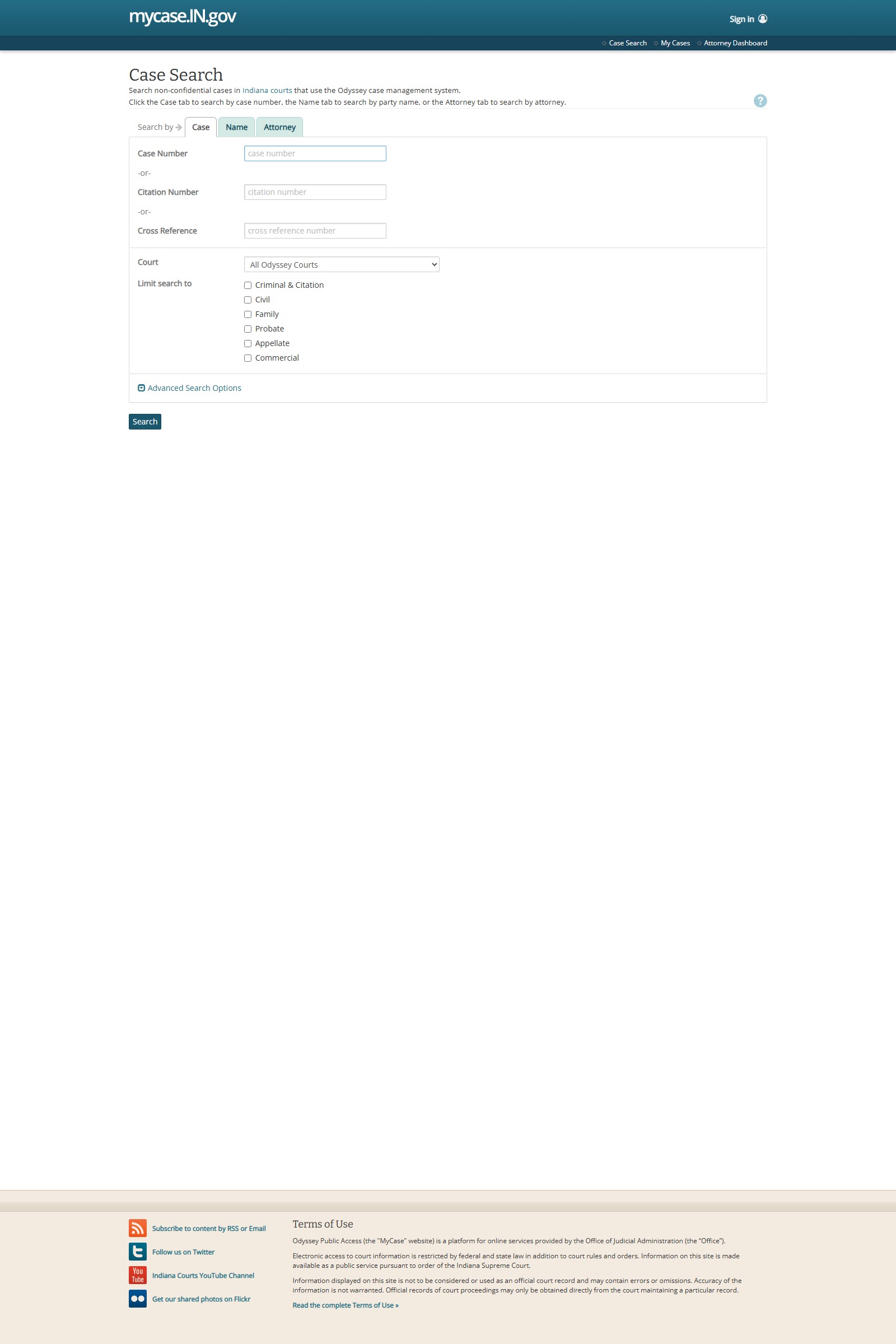
How to Find Court Records After an Arrest
Indiana MyCase is the public case-search portal for court records after a Starke County arrest. Search by defendant name first if the case number is unknown, then narrow to Starke courts when the interface provides a court filter. The portal may show case type, case number, filed date, party names, charges, charge class, scheduled events, warrant activity, bond entries, and disposition. For certified copies, sealed cases, older files, or anything that does not appear online, contact the Starke County Clerk because the official record comes from the court maintaining the file.
- Confirm the arrest and booking through JailTracker or by calling the Starke County Sheriff's Office at (574) 772-3771.
- Open https://public.courts.in.gov/mycase/ and search by defendant name or case number.
- Use Starke County court filters when available, then open the matching criminal case.
- Compare the court charges with the booking charges because the prosecutor's filing may be different.
- Check each charge for the offense level, status, bond terms, warrant entries, hearing dates, and final disposition.
| MyCase Field | Type | Use for Starke County Cases |
|---|---|---|
| Search by | Tabs | Choose Case, Name, or Attorney. |
| Case Number | Text | Use a known court case identifier; hyphens and leading zeroes are not required. |
| Citation Number | Text | Use when the court case is tied to an exact citation. |
| Cross Reference Number | Text | May accept an old case number, agency number, or related system number. |
| Person Last | Text | Required for most name searches unless searching a business name; trailing wildcards may help. |
| Person First / Middle | Text | Optional fields that narrow a defendant search. |
| Birth Date | Date | Optional mm/dd/yyyy field; MyCase warns that DOB is not displayed and may exclude records if not recorded. |
| Business Name | Text | Alternative to person name for business-party searches. |
| Attorney Name or Bar Number | Text | Searches cases associated with an attorney. |
| Sounds-like | Checkbox | Optional for party or attorney name searches. |
| Court | Dropdown | Limit results to a court or court set, including Starke filters when available. |
| Advanced Status | Radio | Limit results to All, Open, or Closed cases. |
| File Date From / To | Date | Narrow results by filed date in mm/dd/yyyy format. |
How Charges Get Filed After an Arrest
The arrest-to-court pathway in Starke County runs through three separate stages. First, a sheriff's deputy or other law-enforcement officer makes an arrest and the person is booked at the Justice Center. Second, the jail roster may show a booking charge or warrant basis. Third, Prosecutor Leslie Baker's office reviews the reports and evidence and files, amends, declines, or dismisses charges in court. The formal court record comes from that filing, not from the roster alone.
Charging documents can carry different names depending on the case and procedure. The document is important because it states what the State of Indiana is accusing the defendant of committing. Later docket entries may show that a charge was amended or reduced, so the earliest filing should be read beside the current charge status.
| Document | Who Usually Files It | What It Does | Reader Note |
|---|---|---|---|
| Complaint | Officer or prosecutor | Starts a criminal accusation based on alleged facts and probable cause. | Often appears early and may not reflect the final charge list. |
| Information | Prosecutor | Formally states charges selected by the prosecutor after review. | Common in many felony and misdemeanor prosecutions. |
| Indictment | Grand jury | Starts charges returned through a grand-jury process. | Less common than prosecutor-filed charging documents, but still a court record. |
The local prosecutor contact page is a useful source for the charging office. It lists Leslie Baker at the Starke County Prosecutor page, 53 E. Washington Street, Knox, IN 46534, with main phone (574) 772-6267.
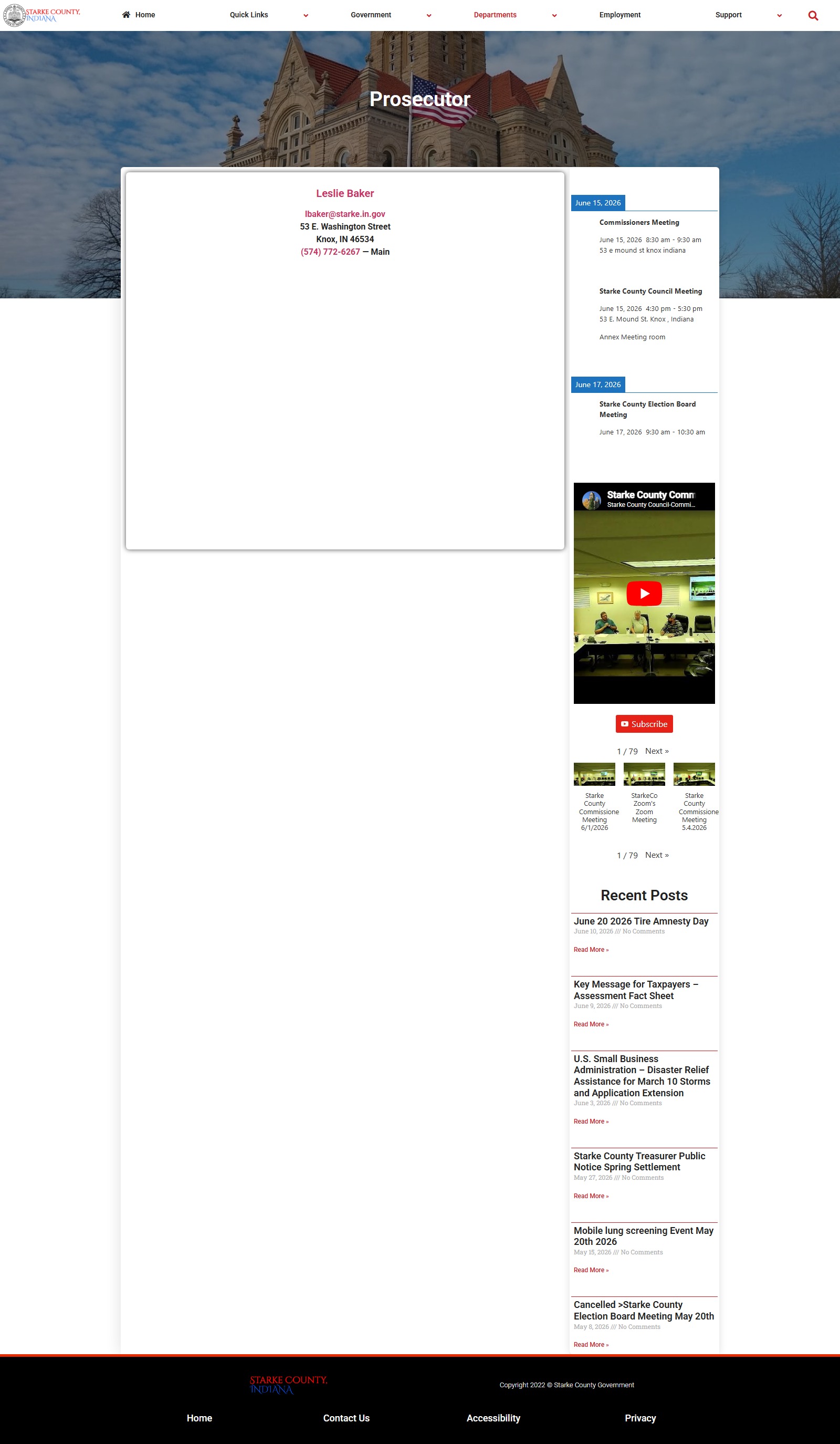
Charge Status in Court Records After Arrest
Charge status is the part of the court record that often explains why an online roster and a docket do not look the same. A roster can display an arrest charge from booking. The court docket can later show that the prosecutor filed a different offense, reduced a felony to a misdemeanor, added a related count, dismissed one count while another remains pending, or obtained a conviction on a plea. Readers should check each count separately because one case can contain several charges with different outcomes.
| Status or Term | Meaning in a Starke County Court Record |
|---|---|
| Pending | The case or count remains open and has not reached final disposition. |
| Amended | The prosecutor changed the charge, wording, level, or count after filing. |
| Reduced | The charge was lowered from a more serious offense to a less serious one. |
| Dismissed | The court ended that count without a conviction on the dismissed charge. |
| Convicted | A judgment was entered after a plea or verdict on that count. |
| Disposition | The final outcome of the case or charge. |
| Initial Hearing | An early court appearance after arrest where rights, charges, and release issues may be addressed. |
| Pretrial Conference | A court event before trial or plea, often used to manage discovery, negotiations, and scheduling. |
| Warrant Recall or Quash | The court withdrew or canceled a warrant. |
| Probation Violation | An allegation that a person violated supervision terms, which can lead to custody or a warrant. |
Bond, Release, and Starke Pretrial Reform
Bond and release conditions are court issues, even when a jail roster displays a bond amount or hold. The Starke Circuit Court page is unusually specific about local pretrial reform. It says Starke County began serving in 2017 as an Indiana pilot program for Evidence-Based Decision Making and Pretrial Reform. The court describes the goal as replacing some financial bonds with technology and supervision that monitor defendants' movement and behavior.
In local practice described by the court, a judge may order home detention with GPS monitoring instead of relying only on money bond. Conditions can also include substance-abuse counseling, random drug screens, and pursuit of employment. The stated goals are reducing jail overcrowding, taxpayer costs, and recidivism while promoting community safety. Community Corrections also functions as a court-ordered alternative to state incarceration and uses GPS electronic monitoring and evidence-based programs.
| Release or Hold Type | How It Works | Local Record to Check |
|---|---|---|
| Cash Bond | Money is paid in the amount and manner set by the court. | Check MyCase and the clerk before relying on a roster entry. |
| Surety Bond | A commercial bail agent posts bond; Indiana has not abolished commercial bail statewide. | Verify the current court order and any hold. |
| Personal Recognizance | The defendant is released on a promise to appear, often with conditions. | Look for release conditions in the docket. |
| Property Bond | Property is used as security when allowed by the court. | Contact the clerk or court for official requirements. |
| Home Detention / GPS | Electronic monitoring and movement limits are used as pretrial controls. | Starke pretrial reform materials and court orders. |
| No-Bond Hold | Release is unavailable until the court or holding agency acts. | Check for another warrant, probation/parole hold, DOC hold, federal hold, ICE detainer, or no-bond order. |
Starke Circuit Court posts local court, pretrial reform, and courtroom information on its Indiana courts page.
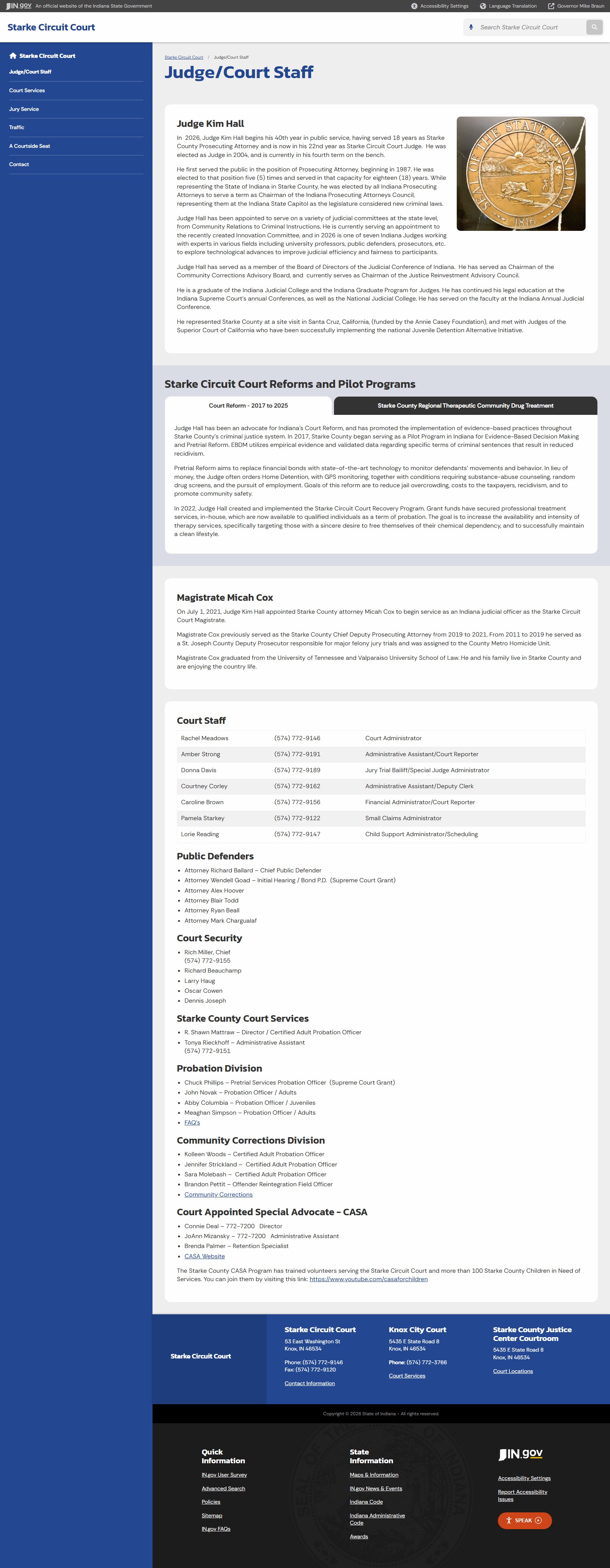
Warrants That Lead to Jail Arrest and Court Records
An outstanding warrant can be the reason a person is arrested, booked into the Starke County Justice Center, and then appears in a court record. A court may issue an arrest warrant for a criminal allegation, a bench warrant for failure to appear or a court-order violation, a probation violation warrant, or a warrant connected to another jurisdiction. A search warrant is different because it authorizes a search of a place or property, not custody of a person.
No official searchable Starke County active-warrant database was located in the research. The sheriff's Most Wanted page shows selected wanted people, not a complete warrant list, and it states that fugitives are presumed innocent until proven guilty. The sheriff's main phone is (574) 772-3771. The anonymous tip line is 574-772-5958. The 2025 annual report listed 423 warrant checks and 107 warrant arrests, which shows why warrant status can affect both custody and later court records.
To track a warrant-related arrest, start with the Most Wanted page only as a selected-publication source, then check MyCase for warrant entries, bond, hearing dates, or recall and quash activity. For official court copies, contact the Starke County Clerk or the court. If a person believes they may have an active warrant, the safer path is to contact an attorney or the court rather than appearing unexpectedly at the jail.
The Starke County Sheriff's Office publishes selected wanted-person information on its Most Wanted page.
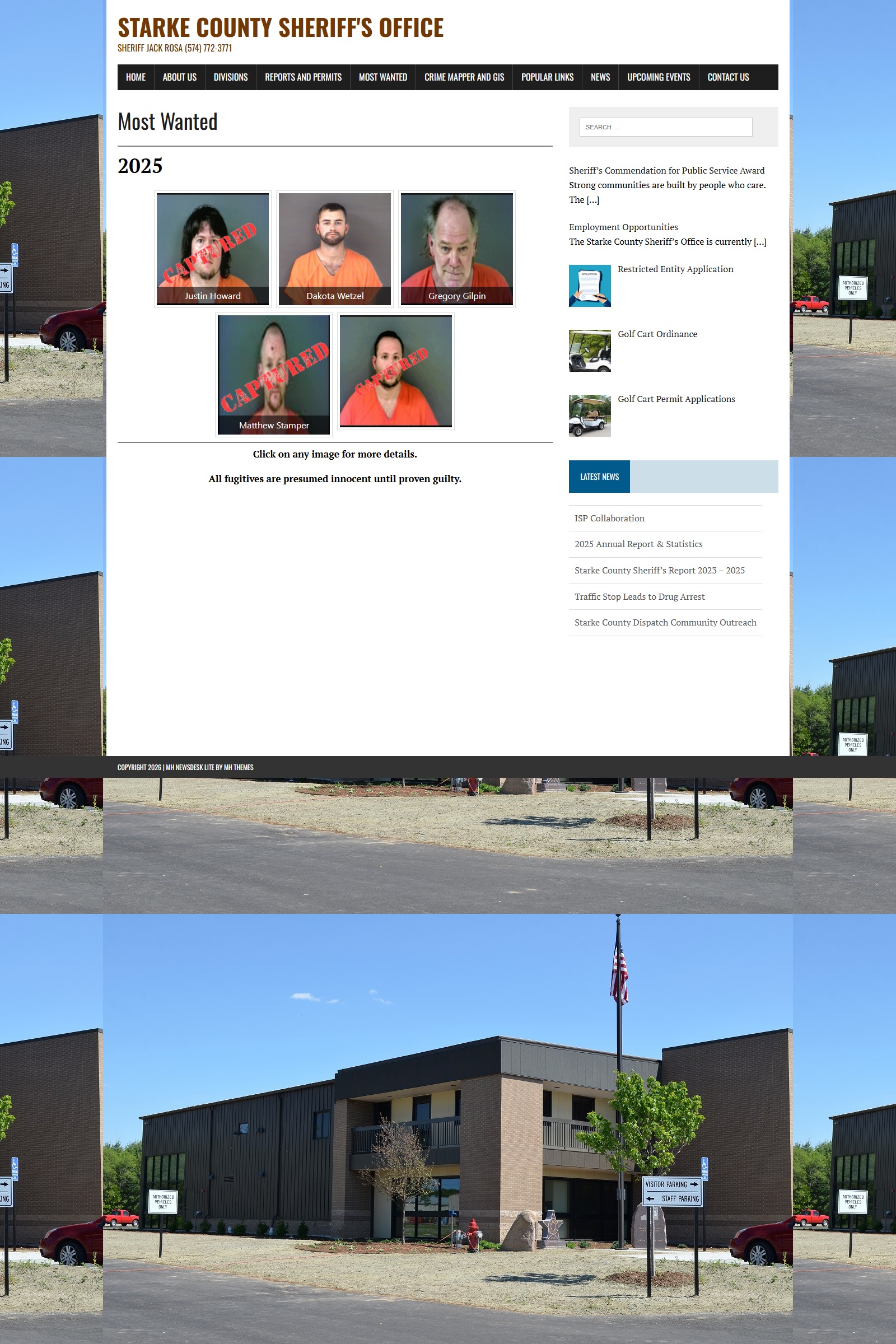
Charges vs Convictions in Court Records
A charge is not a conviction. Court records after an arrest can show accusations, amended counts, dismissed counts, and final judgments all in the same case history. A person is presumed innocent unless and until a conviction is entered by plea or verdict. That distinction is especially important when a booking page, a warrant notice, or an early docket entry is being compared with the final case outcome.
| Point of Comparison | Charge | Conviction |
|---|---|---|
| Stage | An accusation filed after arrest or investigation. | A final judgment after a guilty plea, finding, or verdict. |
| Proof Standard | Filed from probable cause and prosecutor review. | Requires proof beyond a reasonable doubt or an accepted plea. |
| Where It Appears | Charging document, docket, and case charge list. | Disposition, judgment, sentencing, and criminal-history records. |
| Can Change? | Yes. It can be amended, reduced, dismissed, added, or declined. | It can be appealed, corrected, or affected by later expungement proceedings. |
| How to Verify | Compare MyCase entries with clerk-held records. | Use the final disposition or certified record from the clerk or court. |
Sealed vs Expunged Court and Arrest Records
Indiana public-record access is broad, but it has important limits. The Access to Public Records Act, including IC 5-14-3-3, generally gives people the right to inspect and copy public records unless an exception, statute, rule, or court order applies. IC 5-14-3-5 requires defined arrest, summons, daily-log, and jailed-person information to be available. At the same time, IC 5-14-3-4(b)(1) allows agencies to withhold law-enforcement investigatory records at their discretion. That means a basic arrest entry may be public while reports, evidence, recordings, or some images may be withheld or redacted.
Indiana expungement law, IC 35-38-9, can seal or restrict eligible arrest and conviction records. The research also notes 240 IAC 6-1.1-3, which limits dissemination of criminal-history information to noncriminal-justice users. Expungement does not mean every trace of an old court or arrest event disappears from every government system at the same moment, and it does not turn an unofficial screenshot into an official record. The practical question is what the public can see, what criminal-justice agencies can still access, and what a certified court record says now.
| Issue | Sealed or Restricted | Expunged Under Indiana Law |
|---|---|---|
| Public Visibility | Hidden, limited, or withheld from ordinary public access by rule, statute, or court order. | Eligible records can be sealed or access-restricted under IC 35-38-9. |
| Law-Enforcement Access | May remain available to criminal-justice users in limited settings. | Access can remain for authorized criminal-justice purposes depending on record type and law. |
| APRA Interaction | APRA access stops where confidentiality, court order, or discretionary withholding applies. | Expungement can change what an agency may disclose to the public. |
| Best Verification | Ask the clerk or agency holding the record for the current disclosure status. | Use the expungement order and current court or criminal-history response. |
Background Check Considerations
Casual court lookup is not the same as an employment, tenant, insurance, credit, or licensing background check. A public MyCase entry can be incomplete, delayed, restricted, or corrected later. Indiana MyCase also warns that its displayed information is a public service and not the official court record. For any decision that requires legal compliance or certified proof, obtain the record from the Starke County Clerk, the court, or a properly authorized criminal-history channel.
Important: This private website is not a consumer reporting agency and court lookup information may not be used for FCRA-covered decisions.
Restricted Court Records After an Arrest in Starke County
Some records connected to an arrest may be missing from public search results for lawful reasons. Juvenile matters, sealed charges, expunged records, victim-protection information, confidential identifiers, and records under a specific court order can be restricted. Investigatory files held by the Starke County Sheriff's Office may also be withheld or redacted under Indiana APRA even when basic jailed-person information must be available. If the online docket is incomplete, the next step is not to assume the case does not exist. Contact the clerk, court, or originating agency with the name, date of birth if known, arrest date, case number, and arresting agency.